At Home · 6 min read
The Bored-Brain Problem: Why More Exercise Isn't Fixing the Barking
A simple look at mental work vs. more miles — for tired owners, not professional trainers.
 The Dog Weekly Editors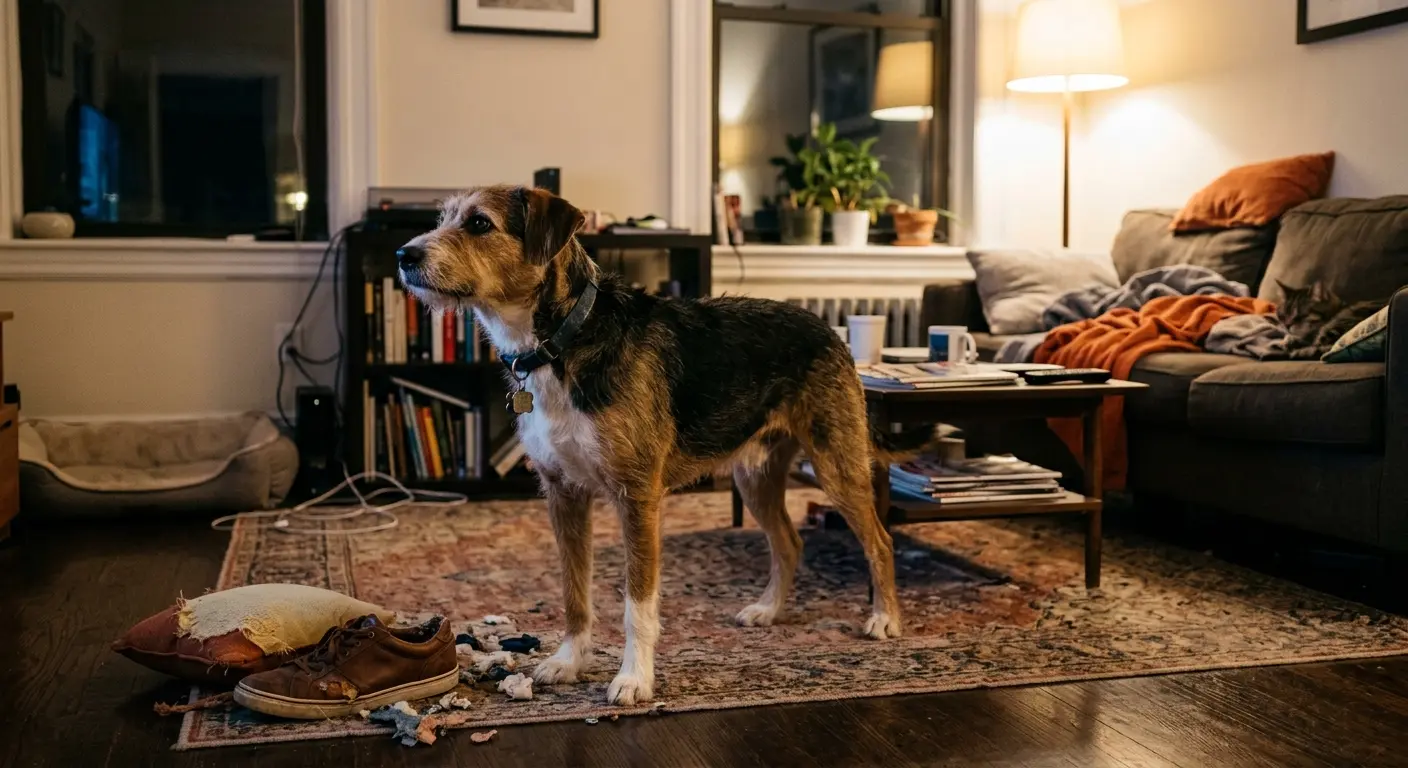
You did the walk. Maybe even a long one — forty-five minutes, the big loop through the park, plenty of sniffing. You come home, fill the water bowl, sit down. And within twenty minutes your dog is barking at shadows, chewing on a cushion corner, or doing laps around the kitchen island like it's a racetrack.
If this sounds like your evenings, you're in very large company. Restless dogs after exercise is one of the most common frustrations owners describe, and the typical advice — "just walk them more" — usually makes things worse, not better.
The issue, in most cases, isn't too little exercise. It's too little thinking.
Tired Legs, Busy Brain
Dogs need physical exercise, obviously. But a lot of what we call "bad behavior" — the barking, the chewing, the inability to just lie down and be calm — comes from a brain that didn't get enough to do all day. A dog can be physically exhausted and mentally wide awake at the same time.
Think about a kid who spent all afternoon on the trampoline but never cracked a book, never built anything, never played a game that made them think. They're tired in their legs but wired in their head. Same idea with dogs.
And here's the part that surprises most people: adding more high-energy exercise can actually make things worse. You're building a fitter dog. A dog that needs even more running to hit the same level of tired. You're training an endurance athlete when what you actually want is a calm roommate.
A tired dog isn't a dog who ran the most. It's a dog whose brain got something to do.
What a Bored Dog Actually Looks Like
Boredom in dogs doesn't always look dramatic. Sometimes it's obvious — torn-up pillows, non-stop barking, digging holes in the yard. But just as often it shows up as low-grade restlessness: following you from room to room, nudging your hand, staring, pacing, whining at nothing in particular.
The dog isn't being "bad." They're not stubborn. They're not trying to dominate you. They're just saying, in the only language they have: I have nothing to do and I don't know how to settle myself.
The good news is that mental work is easier to provide than most people think. You don't need agility courses, expensive toys, or a trainer on speed-dial. You need about ten minutes and a handful of kibble.
Five Simple Brain Games You Can Start Tonight
None of these require special equipment. All of them are force-free. Most dogs catch on within a day or two.
- 1Scatter feedingSkip the bowl. Toss a handful of kibble across the kitchen floor or into the grass. Your dog has to use their nose to find each piece. Five minutes of sniffing is more tiring than a fifteen-minute walk — the nose uses a huge amount of energy when it's actually working.
- 2The muffin tin gamePut treats in a few cups of a muffin tin and cover all the cups with tennis balls. Your dog has to figure out which cups have treats and how to get the balls out of the way. Simple puzzle, surprisingly engaging. You probably have everything you need already.
- 3Name that thingPick one toy. Say its name every time your dog interacts with it. After a few days, ask for it by name with two toys on the floor. Most dogs can learn to distinguish between objects faster than you'd expect. It's slow, low-energy, and extremely tiring for their brain.
- 4Settle on a matThis is less a game and more a skill — but it's one of the most useful things you can teach a dog. Put a towel or mat on the floor. Reward your dog for lying on it. Gradually increase the time. You're teaching them that "doing nothing in this spot" is its own rewarding activity. It's the off-switch most restless dogs are missing.
- 5Cardboard box searchCollect a few boxes and crumple up newspaper inside them. Hide a treat in one. Let your dog figure out which box, then rip into the paper. It's messy but cheap, and the combination of sniffing, problem-solving, and shredding hits three different needs at once.
The pattern is the same in all five: you're asking the dog to work something out instead of just run something off. Ten minutes of this before your evening settles down will do more than an extra mile of walking in most cases.
When This Isn't Enough
Mental enrichment helps the vast majority of dogs who are just bored and under-stimulated. But it's not a fix for everything.
If your dog's behavior includes genuine aggression — growling, snapping, lunging at people or other dogs — that's a different conversation, and you should work with a qualified trainer or veterinary behaviorist. Same goes for destructive behavior that happens only when you leave the house, which may be separation anxiety rather than boredom. And if your dog's restlessness came on suddenly or is paired with changes in appetite or mobility, a vet visit makes sense to rule out pain or a medical issue.
For the everyday stuff, though — the dog who "won't listen," the dog who paces, the dog who turns your shoes into confetti — the answer is usually simpler than people expect. Less running. More thinking. A few minutes a day of work that actually engages the brain.
The Short Version
Your dog probably isn't stubborn, dominant, or broken. They're probably just bored. And the fix isn't another lap around the block — it's giving them something to figure out.
Start with one game from the list above. Do it tonight, ten minutes before you'd normally notice the restlessness kicking in. See what happens. For most dogs, a week of this will change the whole shape of your evening.
No special equipment. No shock collars. No pills. Just a handful of kibble and a little patience.
 We're putting together a free printable guide with a full week of evening brain games. Check back soon — we'll add the download link here when it's ready.